Appeal letters that argue from the record.
Three editable first-level appeal letters for behavioral health and SUD denials, with a checklist of what to do before writing and the records to attach.
Most medical necessity appeals are lost on evidence, not on argument. A letter that restates the original claim without pointing to the specific findings in the record gives the reviewer nothing new to decide on, and the denial is upheld.
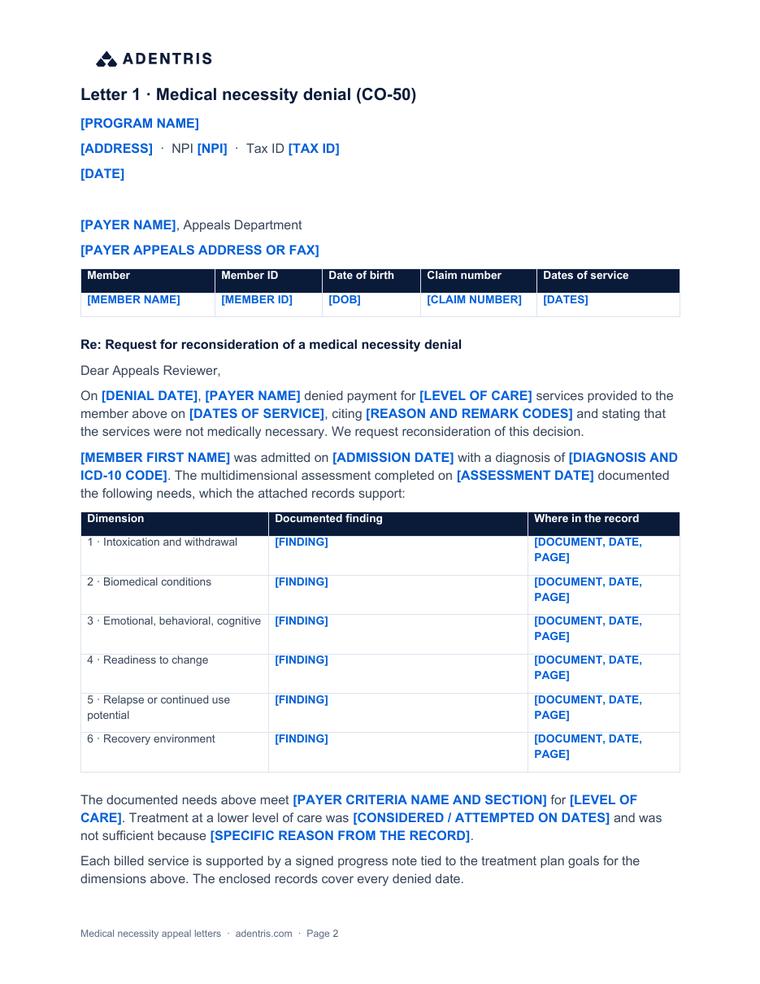
These templates are built the other way around. Each letter walks the reviewer through the six dimensions, points to the exact document and date for every finding, ties the findings to the payer's own criteria, and explains why a lower level of care would not have been enough. Replace the bracketed fields, attach the records listed, and send before the deadline in the denial notice.
What is inside
- Letter 1: medical necessity denial (CO-50)
- Letter 2: payer approved a lower level of care than requested
- Letter 3: continued stay or concurrent review denial
- A dimension-by-dimension evidence table in each letter, plus an optional parity paragraph
- A before-you-write checklist and a list of records to attach
Three letters, one structure that holds up.
Before you write
- ReadThe reason and remark codes, the criteria cited, and the deadline in the notice
- RequestThe plan's medical necessity criteria if they were not included
- PullRecords for every denied day or service, not a summary
The letters
- Letter 1Medical necessity denial (CO-50)
- Letter 2Level-of-care downgrade
- Letter 3Continued stay denial
In every letter
- EvidenceA table mapping each dimension to a finding and where it sits in the record
- CriteriaThe payer's own criteria, named and cited
- ParityAn optional paragraph asking the plan to confirm parity compliance
Built for the people who work the denials.
- Utilization review and appeals staff at residential, PHP, and IOP programs
- Billing teams working medical necessity denials
- Clinical directors who sign appeals
Related on this site: Denial Fightback, Documentation Compliance.
Download the Word fileCatch these before the claim goes out.
Adentris reviews charts and claims against payer rules before submission, so missing documentation, modifiers, and authorizations surface while they can still be fixed.