A biopsychosocial assessment built for placement.
A structured assessment organized around the six dimensions, with a risk rating and justification for each, ending in a level-of-care recommendation the record can support.
An assessment can be thorough and still fail a payer review if the level-of-care recommendation does not follow visibly from the findings. Reviewers look for the line from each dimension's rating to the placement, and for the reason a lower level would not be enough.
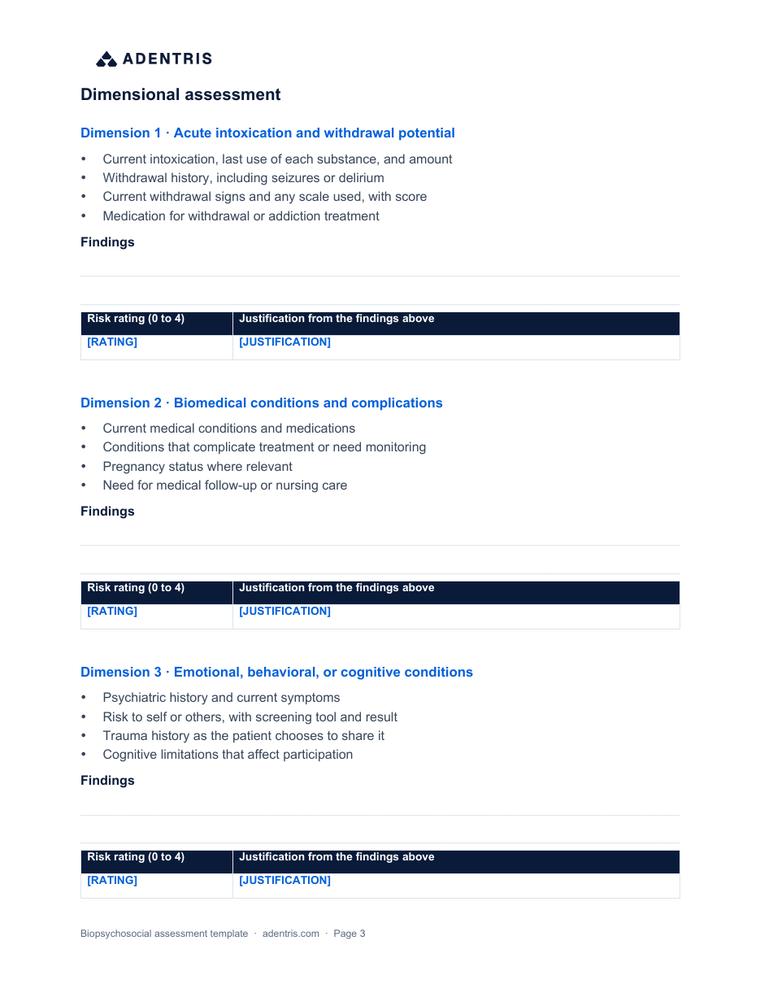
This template is built around that line. History and substance use come first, then each of the six dimensions with prompts, space for findings, a risk rating, and a justification. It ends with the diagnostic impression, the recommended level, why less care would not work, and the patient's response.
What is inside
- Identifying information without names, presenting problem, and substance use history table
- History sections: treatment, medical, psychiatric, family, legal, and strengths
- Six dimensions, each with prompts, findings, a risk rating, and a justification
- Summary with diagnosis, recommended level, and why a lower level is not enough
- Signature block for the assessor and supervisor
Six dimensions, each one justified.
The dimensions
- 1Acute intoxication and withdrawal potential
- 2Biomedical conditions and complications
- 3Emotional, behavioral, or cognitive conditions
- 4Readiness to change
- 5Relapse, continued use, or continued problem potential
- 6Recovery and living environment
Around them
- HistorySubstance use table and six history sections
- RatingA 0 to 4 risk rating with a justification per dimension
- PlacementRecommended level and why less care would not work
Built for the people who work the denials.
- Intake clinicians and counselors in SUD and co-occurring programs
- Clinical supervisors who review assessments
- Programs standardizing assessments across sites
Related on this site: Documentation Compliance, Documentation co-pilot.
Download the Word fileCatch these before the claim goes out.
Adentris reviews charts and claims against payer rules before submission, so missing documentation, modifiers, and authorizations surface while they can still be fixed.